
The Power of Vision
BUSINESS GROWTH·STRATEGY·LEADERSHIP
The Power of Vision: Where Are You Going, and How Will You Get There?
Every thriving business starts the same way — not with a product, not with funding, but with a clear, compelling vision. Without it, you’re not building a company; you’re just staying busy.
What Does It Really Mean to Have a Vision?
A vision is more than a mission statement pinned to a wall. It’s the vivid, specific picture of what your company looks like when it’s operating at its highest potential. It answers the question: if everything went right, what would we have built?
A strong vision does three things simultaneously:
•Inspires — giving your team something bigger than a paycheck to work toward.
•Filters — helping you say no to opportunities that don’t serve your direction.
•Guides — turning ambiguous decisions into clear choices when you align every option against where you’re headed.
“Think of it this way: A ship without a destination doesn’t sail — it drifts. Your vision is the coordinates. Every strategy, hire, and investment you make should be moving you closer to those coordinates.”
Mind Mapping Your Vision
One of the most powerful tools for building and communicating your vision is mind mapping. Unlike a linear list, a mind map mirrors the way your brain actually thinks — branching from a central idea outward into themes, sub-themes, and action steps.
Start with your core vision at the center. From there, branch out into the key pillars of your business:
•Customers & Market
•Revenue & Growth
•Team & Culture
•Product & Service
•Brand & Reputation
•Operations
Under each pillar, ask: what does success look like here? Keep expanding until abstract ideas become concrete outcomes. Mind mapping tools like Miro, Lucidspark, or even a blank whiteboard work perfectly for this exercise.
Short-Term Goals: Your 6, 9, and 12-Month Milestones
Your vision lives in the future. Your short-term goals are the bridge that gets you there. Every quarter — and every month — you should know exactly what you’re building toward.me Question
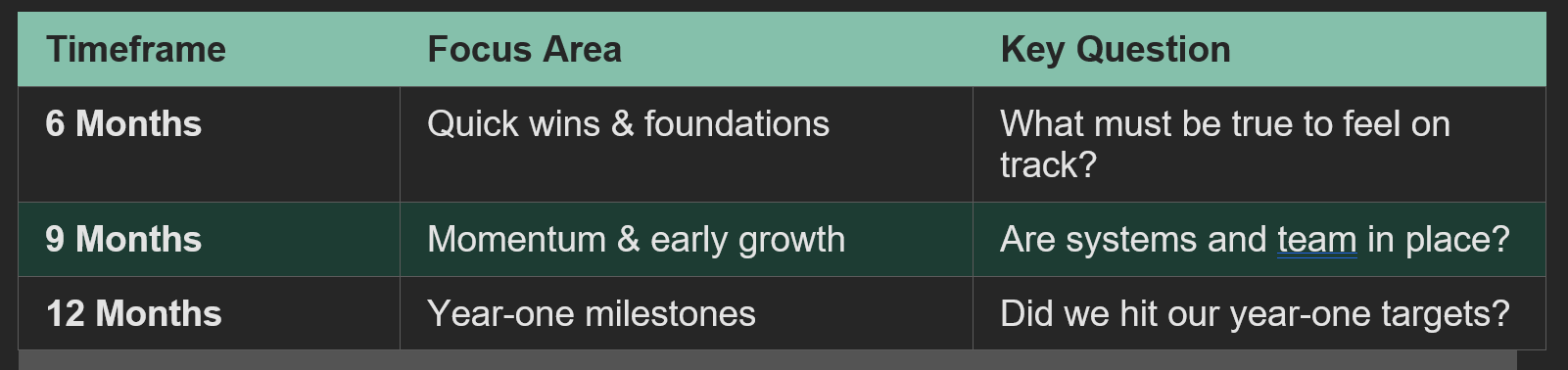
Ask yourself: what must be true in 6 months for you to feel like you’re on track? These aren’t vague aspirations — they should be specific, measurable targets. Revenue numbers, customer counts, team size, product releases. The specificity is the point.
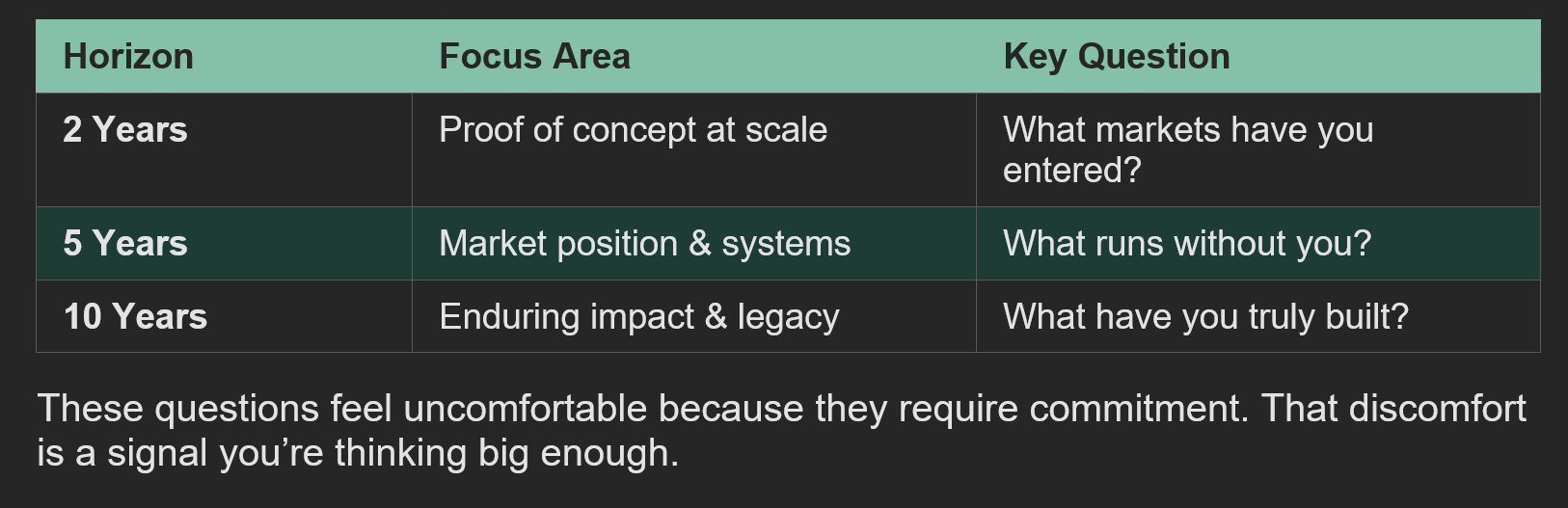
Long-Term Goals: Your 2, 5, and 10-Year Horizon
Short-term goals keep the engine running. Long-term goals define what you’re actually building. Most business owners are comfortable thinking 12 months ahead. The ones who build exceptional companies think in decades.
Why This All Matters: You Can’t Navigate Without a Map
Research consistently shows that people and organizations with clearly written goals are significantly more likely to achieve them. But the reason runs deeper than motivation psychology.
Without a vision and defined goals, every decision exists in a vacuum. You hire based on today’s needs, not tomorrow’s team. You chase revenue without knowing what kind of business you’re building. You react instead of lead.
When you have a vision — and when that vision is connected to a timeline of milestones — something shifts. You stop being reactive and start being intentional. You make bolder decisions. You attract the right people. And on hard days, you have a reason to keep going.
Your Next Step
Set aside two hours this week — not to answer emails, not to take calls — to sit with a blank page and answer one question honestly: where is this company going?
•Write down your 6-month goal.
•Write down your 12-month goal.
•Write down your 5-year vision.
Don’t worry about getting it perfect. A rough map is infinitely more useful than no map at all. The act of writing it down is the beginning of making it real.
“A goal without a plan is just a wish. A vision without a timeline is just a dream. Build both.”
